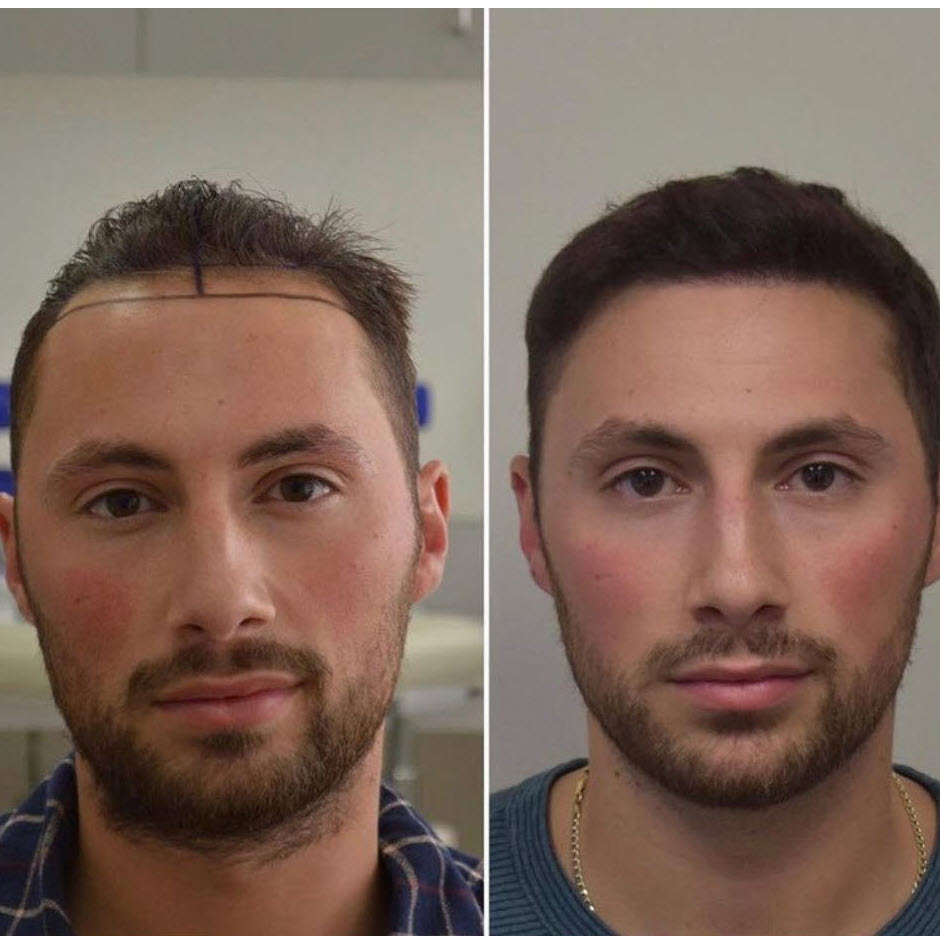
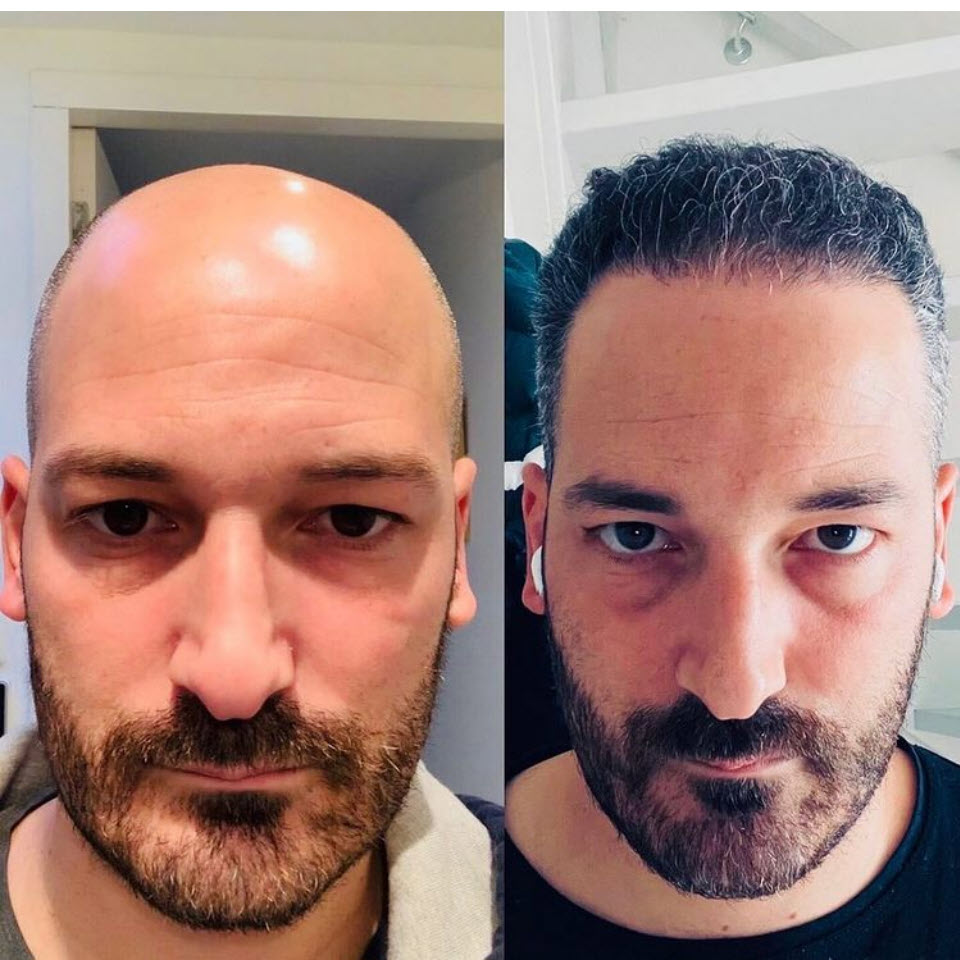
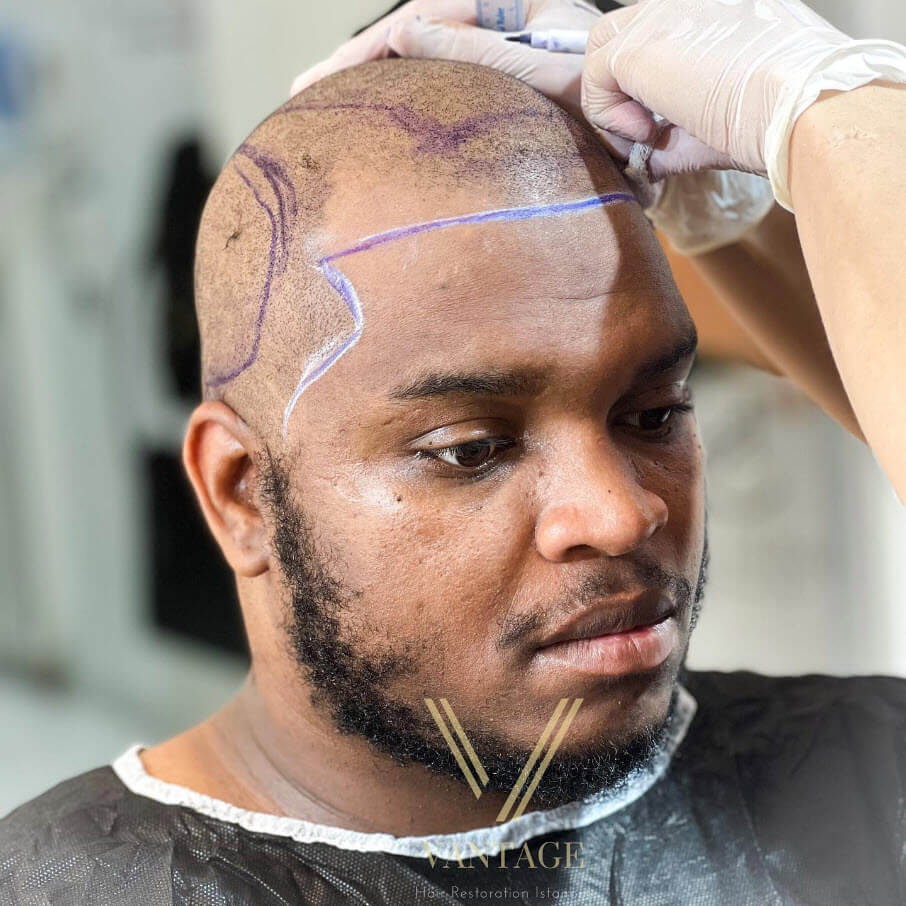
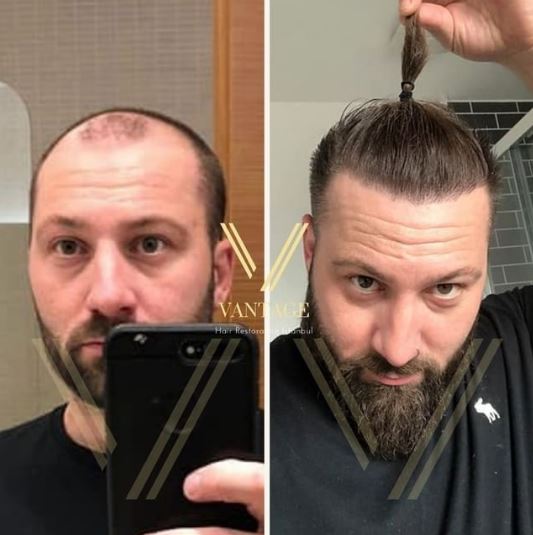
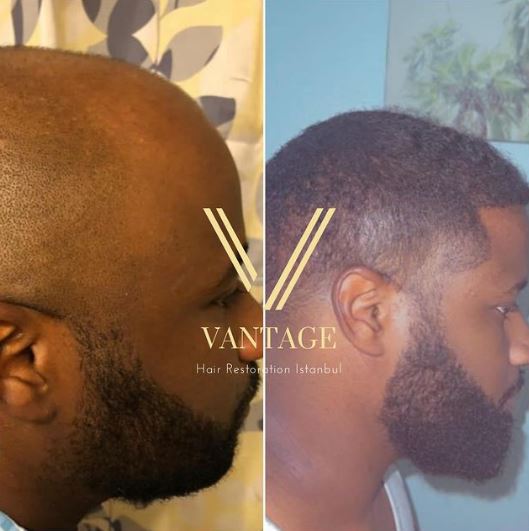
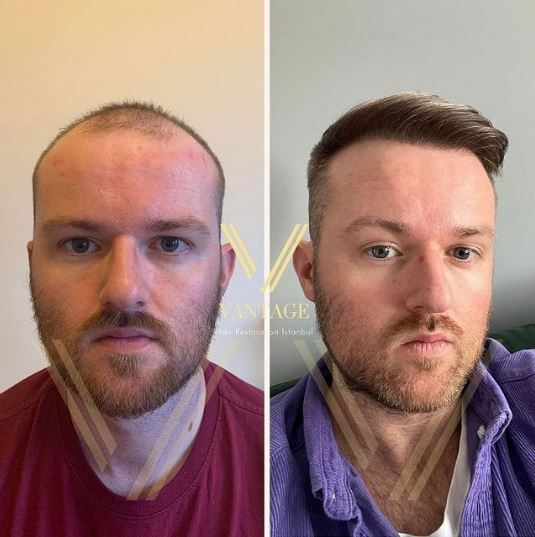
The world of transplants offer an array of opportunities particularly to individuals who do not have viable hair follicles in their scalp area. One such case is a beard to head hair transplant. Individuals who suffer from extreme hair loss and thinning may opt for bear to head hair transplant if they are eligible and have viable hair follicles in their beards.
There are many benefits to beard to head hair transplants. Aside from giving the patient their desired hair style it will boost morale and self-confidence. This totally custom state of the art technology helps patients who think they are beyond saving when it comes to achieving their hair recovery goals.
Continue reading to find out everything you need to know about beard to head hair transplants.
Why Choose Beard Hair for Scalp Transplants?
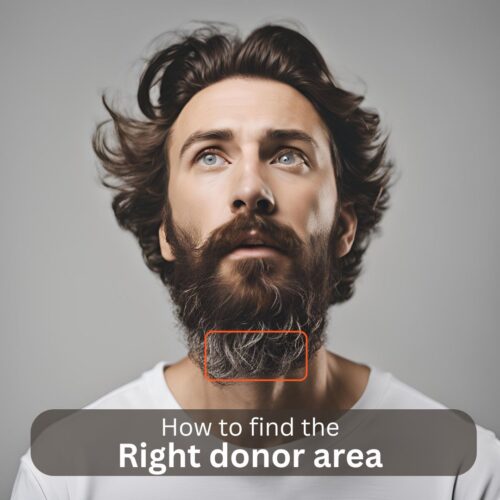
As far as hair goes for viable hair for scalp transplants, beard hair is by far the best alternative. This is because just like scalp hair, beard hair is coarse and thick making it seamlessly blend in with your scalp hair post-operation. Beard hair is a lifesaver when the patient doesn’t have enough donor hair follicles in the scalp and needs more in terms of coverage for their new hairline.
Beard hair is optimal for scalp transplants because of its durability as a hair follicle too, particularly when the patient needs more density in areas that are stubborn like the crown area or middle of the scalp area. In order to maximize the available hair follicles choosing beard hair for scalp transplants is a great solution and allows versatility in the patient’s hair transplant resources.
Who is a Good Candidate for Beard to Head Hair Transplant?
Any good candidate to a potential hair transplant must be eligible for the transplant from the get-go. Usually the eligibility criteria for a hair transplant is simple:
- having enough donor hair follicles
- health of the skin in the transplantation area
- overall health of the patient.
If these 3 conditions are met then patients are usually eligible for hair transplants.
Potential Risks and Considerations
Even though hair transplants are safe and high-successful operations there are still some potential risks that are associated with them, as with any other procedure. Some mild pain or discomfort is to be expected however some patients experience it worse than others which may lead to other complications.
Or the area of operation may become infected due to poor hygiene and/or scratching/touching the area. In such cases the integrity of the operation may be under threat and the patient may even start an antibiotic treatment.
In order to eliminate these risks make sure to follow the guidelines given to you by your doctor. The patient should also consider researching the operation through and through in order to know what to expect and when to act. Knowing what to expect and setting realistic expectations is a steadfast guarantee to the success of the hair transplant.
The Procedure of Beard to Head Hair Transplant
Most hair transplants operate in the same logic: harvesting hair follicles from the donor area and transplanting them to the recipient area. Where the hair is harvested from, with which method and how much of it is harvested are all factors that contribute to nominating the type of hair transplant the patient is getting.
Here is a step by step rundown of the procedure of beard to head hair transplant:
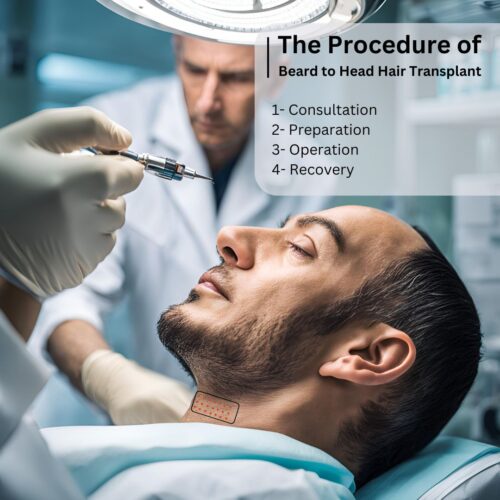
1- Consultation: Like all transplants patients go in for a consultation where the doctor explains how beard hairs can substitute as donor hairs.
2- Preparation: Patient prepares for the operation. They follow the guidelines provided by the hair clinic and cease consuming alcohol and smoking prior to the operation.
3- Operation: During the operation the hair follicles are extracted from the beard area and transplanted to the recipient area in the scalp. The doctor might use the FUE (Follicular Unit Extraction) or DHI (Direct Hair Implantation) method in order to achieve the most seamless transplantation.
4- Recovery: After the operation the patient enters the recovery stage where they need to follow a few simple guidelines to guarantee the health of their scalp and ensure that their new hair follicles enter the growth phase safely. In order to do so they need to be mindful of when and how they wash their hair, not touch the sites of operation and sleep in an elevated position.

Beard to Head Hair Transplant Aftercare Tips
It is easy to look after yourself after a hair transplant as they are minimally invasive and need little to no aftercare. However the existing steps, though simple, are crucial to guarantee the success of the operation.
- Patients should make sure to take it easy a couple of days post operation, as their body is recovering and easing into itself. At this time there may be scarring, headaches, itching in the areas of operation.
- Patients will see scabs forming in the sites of operation and they should under no circumstances touch or pick on these scabs. They can gently wash them when their doctor clears them for the initial wash and use shampoos that will be gentle on their already sensitive skin.
- Sleeping in an elevated position where the donor beard area is touching the pillow will be the best option for the first week of the operation as the skin is sensitive and laying down might cause further discomfort.
Expected Results after Beard to Head Hair Transplant
According to the hair transplant growth timeline patients will see that their scalp skin is on the mend usually around the 1-2 weeks post-op and return to their normal schedules. Usually the skin for beard to hair transplant takes shorter to heal as they are located in two distinct parts of the face.
Around the 1-3 months is when the initial shock loss, shedding scabs and decreased sensitivity in the area can be observed.
Around the 8-10 months mark the patient has made significant progress in terms of length of growth and durability of hair. For a more realistic rundown of what to expect from a hair transplant make sure to read our article that covers hair growth timeline in detail.
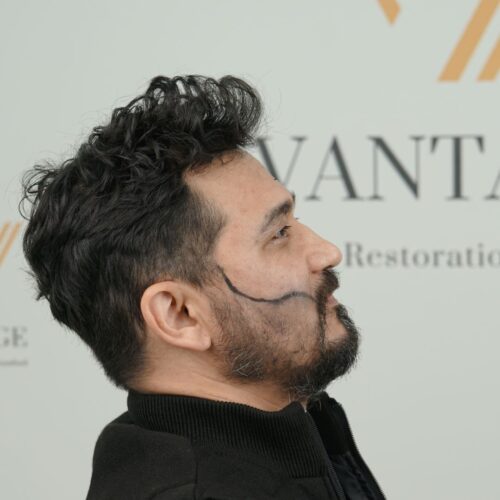
Beard to Head Hair Transplant Opportunity in Turkey
Turkey is the hair transplant capital that welcomes thousands of medical tourists from all around the world every year for solely hair transplants. Having cost-friendly options, well-endowed clinics and experienced surgeons Turkey has made a name and space for itself in the hair transplant community. A hair transplant that requires visions and attention to the patient’s specific needs like a beard to head hair transplants are no exception.
If you are looking to travel for your hair transplant needs, consider Turkey in your research. You’ll see that Turkey offers options that will check all of your boxes: Cost efficiency, quality service, hospitality, hygienic and advanced clinics with expert surgeons.
How to Start your Journey for Beard to Head Hair Transplant
Firstly you need to contact varios hair clinics to gain information in order to make the best decision for your unique case and settle on a clinic that gives the most attention. Only after settling on a clinic and setting up a date should you start making arrangements for your travel. This is advised in order to eliminate compilation down the road.
Then you need to check visa requirements from your nation to Turkey. Turkey has a very open visa policy and most countries have easy access to visas. (You may check your eligibility here.) The only thing left to do after that is making arrangements to travel to Turkey and start your hair growth journey.
FAQs about Beard to Head Hair Transplant
How much hair can you harvest from beard for transplant?
A harvest from the beard area can yield upwards of 2500 to 3000 hair grafts and thus can help not just as a single source of hair grafts but also as a backup source of available hair grafts in the case of extreme hair losses.
Can I shave my beard before the beard to scalp hair transplant?
Nowadays hair transplants can be achieved without a shave which also goes for beard to scalp hair transplants. Shaving before or after the operation should be fine so long as your doctor clears you for shaving.
Article Review By: Dr. Jyothi Shenoy V
Profile Link
MBBS, MD – Obstetrics & Gynaecology, MRCOG(UK)
23 Years Experience Overall