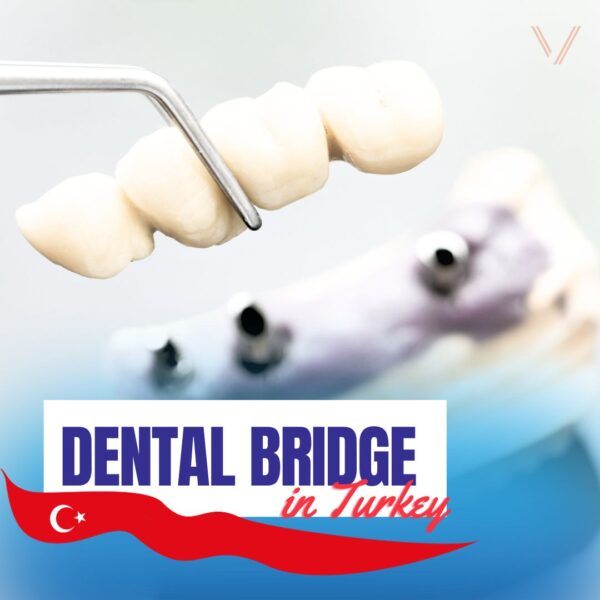
Thousands and thousands of patients come to Turkey each year for their dental and cosmetic treatments and dental bridge operations are no stranger! This is because not only is Turkey housing top-notch facilities with the latest technology but they are also providing the best patient care system and attainable costs.
Compared to the rest of the world the cost for dental bridges is 50 to 70% lower with better and more inclusive patient care. Many clinics offer the best quality dental treatments with porcelain and zirconia dental bridges along with arranging accommodation, transportation and follow-up visits to ensure full recovery.
In this article we will go over everything you need to know about dental bridges and why you need to consider clinics in Turkey for any and all of your dental needs.
What is a dental bridge treatment?
When the patient is missing teeth, a dental bridge is implemented in order to replace and anchor the new artificial teeth to adjacent natural teeth. This prosthetic device is implemented in order to cement the new teeth and make it durable for years and tears to come.
Not only do dental bridges allow the newly implemented tooth or teeth to be cemented into place it is also an anchor for the neighboring teeth as it helps with maintaining proper alignment for biting or even speaking.
By evaluating the bone levels and the overall periodontal health dentists are able to implement bridges to make sure that the new teeth are healthy and the overall dental alignment is steady.

Dental Bridge Procedure Step by Step
Here is a step by step rundown of how to get a dental bridge procedure.

Consultation
As with any treatment or procedure the first thing the patient needs to do is visit a clinic. In a consultation session your dentist will do a thorough check of your teeth as well as order a panoramic scan of your teeth. This will not only allow your doctor to evaluate and prepare a course of action for total recovery.

Preparing the Teeth
In order for a dental bridge to be implemented the area needs to be numbed and relatively clean. As your dentist waits for the local anesthetics to settle in they will prepare the area and stop the flow of saliva for an easier working space.

Removing Enamel
In order to place the prosthetic 1-2 mm of tooth enamel may be needed to remove. This is done in order to create space for crowns. Note that if implants are used a period of time may be needed in order to integrate before continuing with the bridge.

Temporary Bridge
Dental bridges need to be precise so your dentist may want to check for biting and teeth alignment by placing a temporary dental acrylic bridge. It also protects the teeth that have been prepared. This provisional bridge may be left on to test it out or to protect the teeth before the real zirconia or porcelain bridge is to be put in.

Fitting and Cementing
Your doctor will want to see how well the new bridge will fit so they may make some minor adjustments to make sure that the color matches and the teeth fit snugly and comfortably. After making sure the doctor will start the binding process often referred to as cementing as the bridge needs to be literally cemented to your teeth.
It is done with medical grade resin and after it is cured and excess is cleaned the doctor will ask you to bite down to check whether there is an obstruction to the natural feel of your teeth line. Et voila!
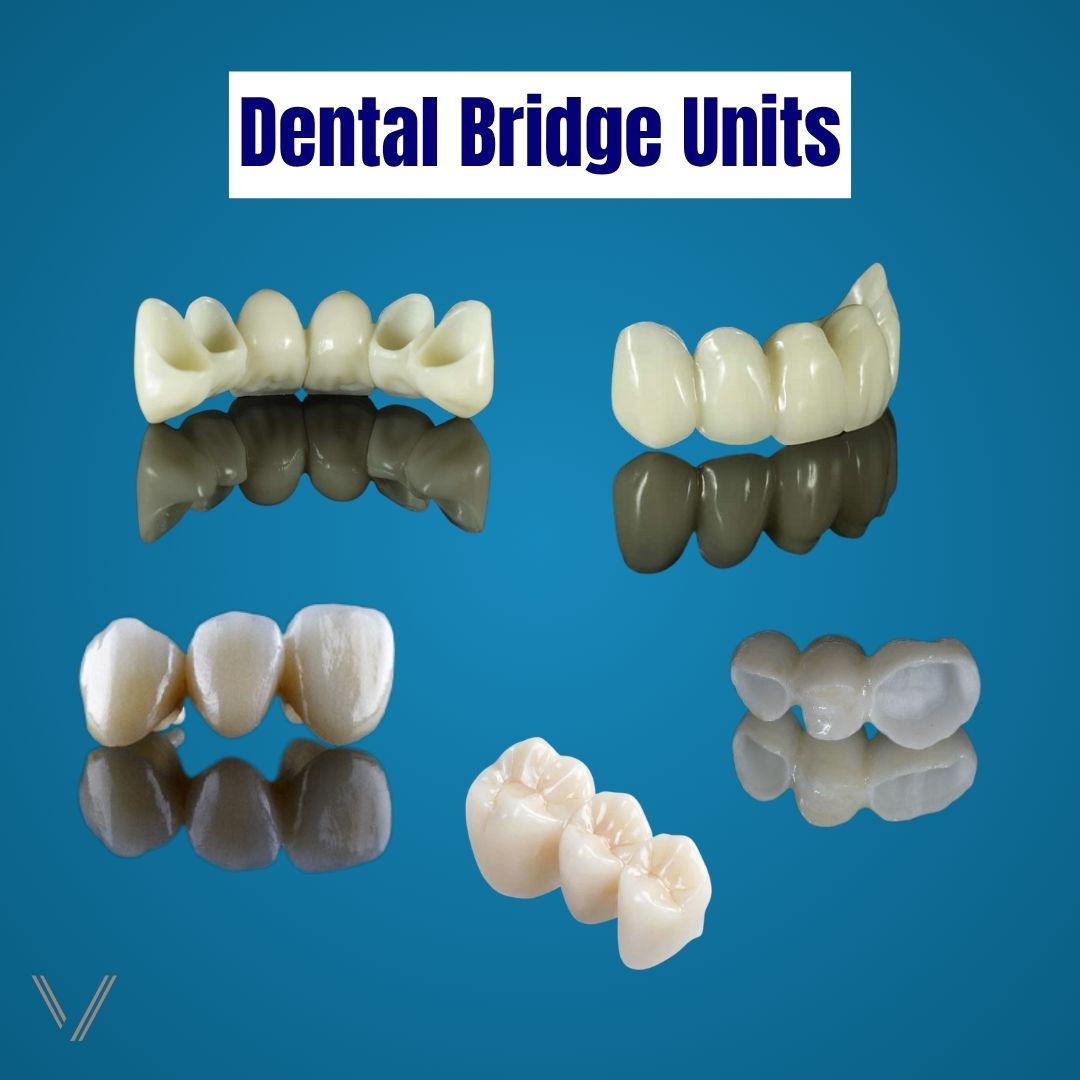
Dental Bridge Units
When researching dental bridges you may have come across the term “units” to refer to a one or a set of teeth. In dentistry a dental bridge unit refers to one crowned tooth or one artificial tooth or pontic as the doctors call them. So the planning of the operation, the cost and the actual planning is based on units.
For example if a single tooth is missing then it is usually a 3-unit bridge because the front and back crown is connected to the replacing tooth. If there are larger gaps or more than one then the unit number may increase.

Dental Bridge for One Tooth
A dental bridge for one tooth is more often than not a 3 unit operation. This is because in order to replace one tooth a bridge of the adjoining front and back of the teeth needs to be constructed. Thus the neighboring teeth will be crowned and the newly implemented artificial teeth also called a pontic is used for support.
There are a few dental bridge options for one tooth. The cantilever and Maryland bridges can be valid options as they save on the removal of enamel however if a stronger bite is needed an implant crown may be preferred. Ultimately along with the teeth availability material and cost are very important in the determination of the choice of method for dental bridge for one tooth.

2 Unit Dental Bridge
When there is a healthy tooth right next to the missing tooth, a 2 unit dental bridge can be preferred. The natural tooth is used to hold up and strengthen the missing one. One metaphor that could be used for this case is when a shelf is not only nailed on the one side, though it may hold the shelf up it would probably not be trustworthy for a heavy-duty use.
If the pontic tooth is to be implemented to a zone where there is not a lot of chewing pressure then a two unit dental bridge might be useful.
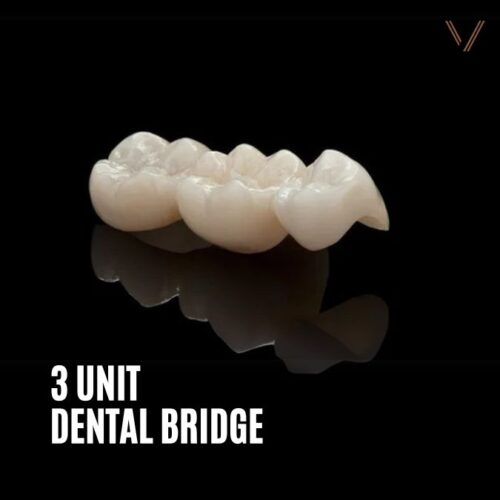
3 Unit Dental Bridge
3 unit dental bridges are the most common type of dental bridges as they are usually done to replace and strengthen one missing tooth. The operation is simple: the adjacent teeth’s enamel is shaved and with crowns the new pontic is stabilized.
The logic is cementing the pontic so that it will mimic the actual teeth as close as possible both in function and in aesthetic. It is a versatile tactic that works well in various areas of the mouth.

4 Unit Dental Bridge
What happens when there are two missing teeth in a row? That is when 4 unit dental bridges come into the picture.
The logic is similar to the 3 unit dental bridge where the adjacent teeth are used to strengthen the newly implanted pontic teeth. It is covering a bigger space thus the material should reflect the need for strength in this area.

6 Unit Dental Bridge
Following the logic of 3 and 4 unit dental bridges 6 unit dental bridges are for patients who are missing 3 teeths in a row. As the bridge is to be lengthy the material used in this bridge needs to be strong and sturdy. The treatment could be done by implementing support crowns in the adjacent area or it could also be achieved with sets of 2-3 implants.
Some patients may prefer removable dentures as the area needs to be kept clean however a successful 6 unit dental bridge will eliminate the risk of further complications or need of strengthening in the area.

Dental Bridge Costs in Turkey
The cost of dental bridges depend on the number of teeth that are being treated and the material used to bond the pontic and the adjacent teeth. But there is also the issue of coverage of insurance as dental procedures are not always fully covered by insurance.
In Turkey, where dental treatments are much more patient-oriented compared to the rest of the world, dental bridge cost without insurance is anywhere between 300-400 Euro (for a bridge of 3 teeth). This is bound to increase depending on the material used or if the number of teeth to be bonded increases. For example the average price of a dental bridge that is made with zirconium is around 450-550 Euros for a bridge of 3 teeth.
In some cases dental bridges are considered absolutely necessary for teeth survival thus some insurances do cover them. However dental works are always partially covered. Dental bridge cost with insurance would be 150-200 Euros for a bridge of 3 teeth. However this cost would increase or decrease depending on the insurance plan.
Contact your broker to learn the exact coverage of dental bridges by insurance.

Dental Bridge vs Implant – What are the differences?
Dental bridges and implants have a supporting relationship. A dental bridge uses adjacent teeth or implants to create support for the pontic by adding a prosthetic whereas implants are done to create standing for teeth like a new root or shape.
Dental Implant vs. Bridge
- Where bridges are easy and quicker treatments, implants take longer to heal and may require minor surgery.
- Bridges as prosthetics last for 15-18 years where implants are designed to last for more than 20 years.
- Taking care of bridges may be more troublesome as additional floss needs to be done in order to ensure hygiene in the area but taking care of implants are just like taking care of teeth.
- Dental bridges may be covered by insurance as they are operations done to secure and strengthen teeth but implants may be classified as elective or cosmetic and thus not covered under insurance.
- The costs are somewhat similar, a simple 3 unit dental bridge can cost anywhere between 1000 to 1500 EUR and a single crown may cost anywhere between 1000 to 1400 EUR.
Dental Bridge Before and After Photos in Turkey
Here are before and after photos for dental bridges from our patients. Notice how structured the teeth look after the strengthening and security provided by dental bridges.
Not only are the teeth more strong but they also look aesthetically coherent. The difference between the before and after is quite stark but as proven by the photos not unattainable.


FAQs about Dental Bridge in Turkey
How long does a dental bridge last?
If taken care of properly and followed up with regular check ins a dental bridge can last anywhere between 12 to 18 years for a patient.
Is a dental bridge permanent?
Dental bridges are designed to last a long time. Though not permanent they stand the test of time. Changing the material of the bridge to more sturdy material like zirconium or porcelain will increase the longevity of the bridge.
How to clean dental bridges?
Dental bridges are like caps for your teeth thus it is very important to clean them. Along with your daily dental regiment of brushing you need to implement a flossing routine for your bridges. This includes flossing the area rigorously so that there is no build up underneath. Consult your doctor for tips on how to floss correctly.
What kind of dental floss do you use for bridges?
The dental floss used for bridges is a medical grade floss somewhat thinner than regular dental floss. There are also precut versions to help you gauge the correct amount of use.
What are the symptoms of an ill-fitting dental bridge?
Going by feeling is key in identifying an ill-fitting dental bridge however there are some symptoms to look out for. Contact your doctor if you are experience one or more of these symptoms:
- Shifting or visible gaps: If you can see gaps or see your bridge shift with movement then that bridge is not well cemented.
- Gum Sensitivity: If the gums are irritated or inflamed after the implementation of the dental bridge then the bridge might be resting on the gum too much.
- Discomfort: If you are experiencing pain as you chew, eat or speak then the bridge may be compromised. Difficulty in chewing is a clear indicator of an ill-fitting dental bridge.
What are the symptoms of dental bridge infection?
Gum sensitivity, inflammation in the gums, bleeding, pain whilst chewing or eating and a constant bad taste in your mouth are indicators that your dental bridge may be infected. Consult your doctor if you are experiencing any of these symptoms.
How long after dental bridge can I eat?
Ideally the patient should wait a few hours before eating after a dental bridge treatment. However after the dental bridge is cemented a 30 to 60 minutes waiting period may suffice. Start with easier to chew foods and liquids. As there may be some sensitivity, extremely cold or hot liquids may not be suitable for the first few hours.
Can you put a dental bridge after a crown?
Using the crowned tooth as the leg of the bridge a dental bridge can be put after a crown. In some cases a new crown may need to be implemented in order to secure the bridge and improve the new structure.
Article Review By: Dr. Jyothi Shenoy V
Profile Link
MBBS, MD – Obstetrics & Gynaecology, MRCOG(UK)
23 Years Experience Overall